I respectfully acknowledge the Wurundjeri people as the traditional custodians of the unceded lands, waters and skies where my studio is situated, and pay respects to their elders past and present and emerging and the stolen generations.
Snap Dress Prototype 02
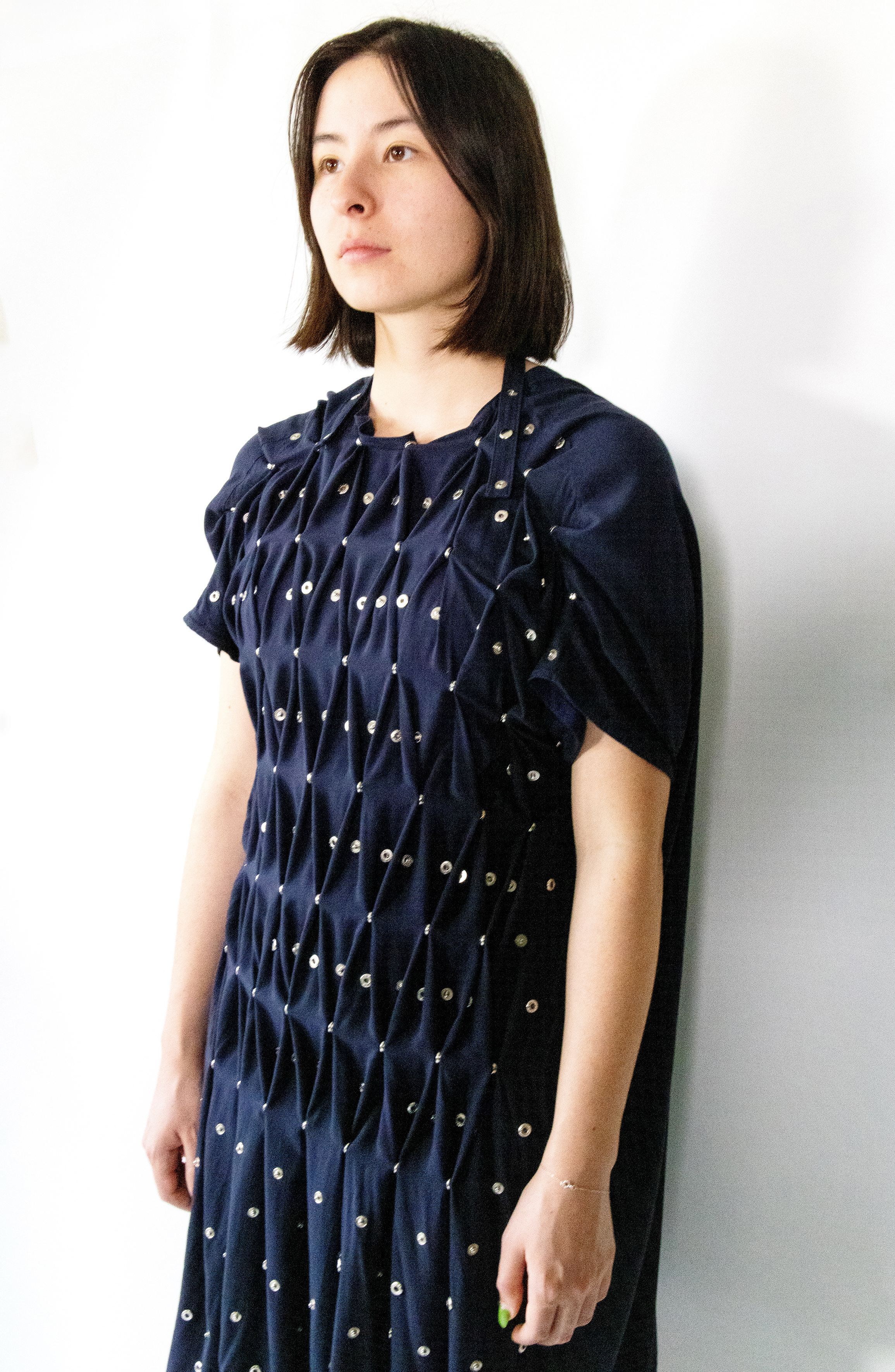
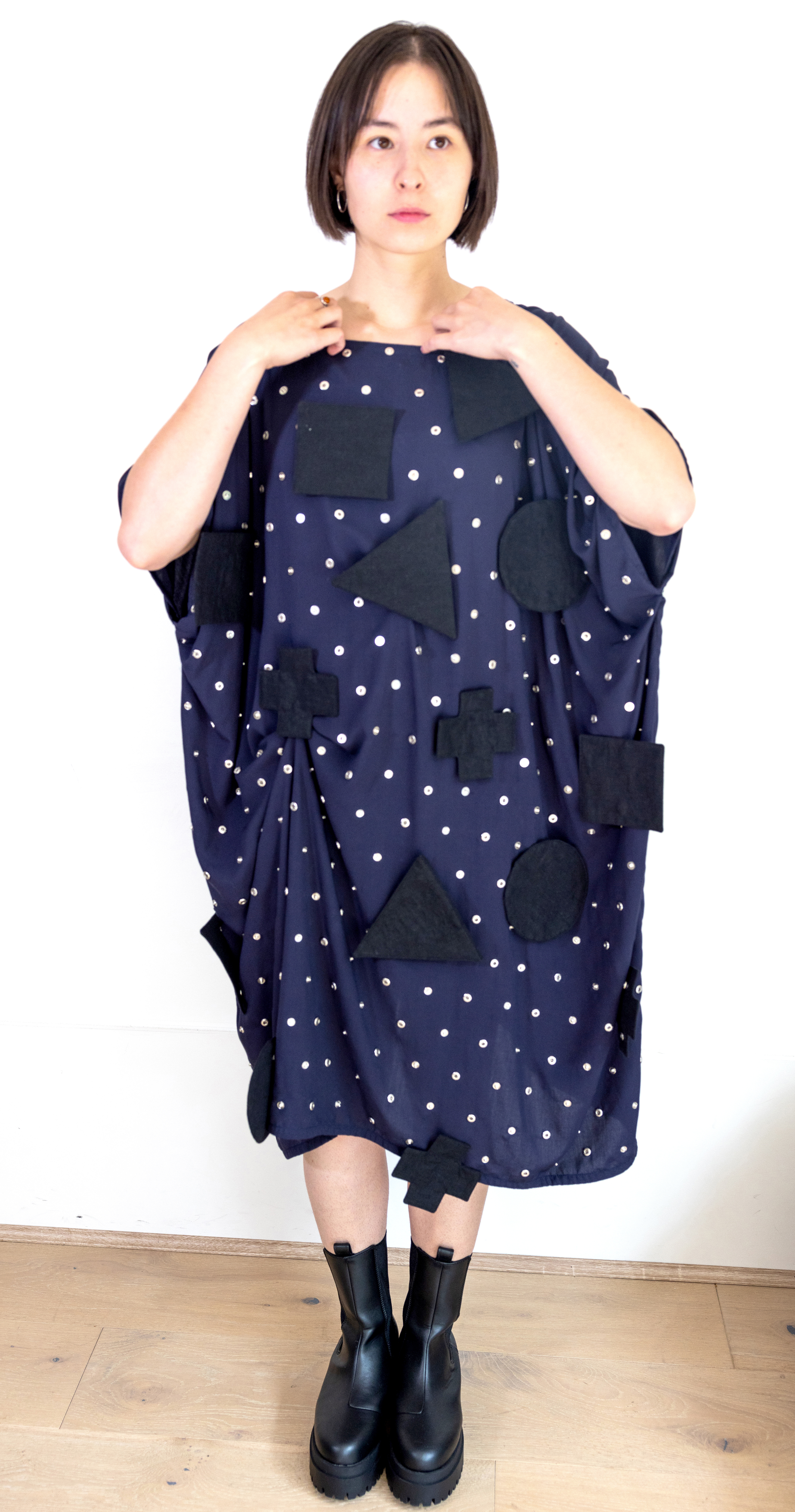
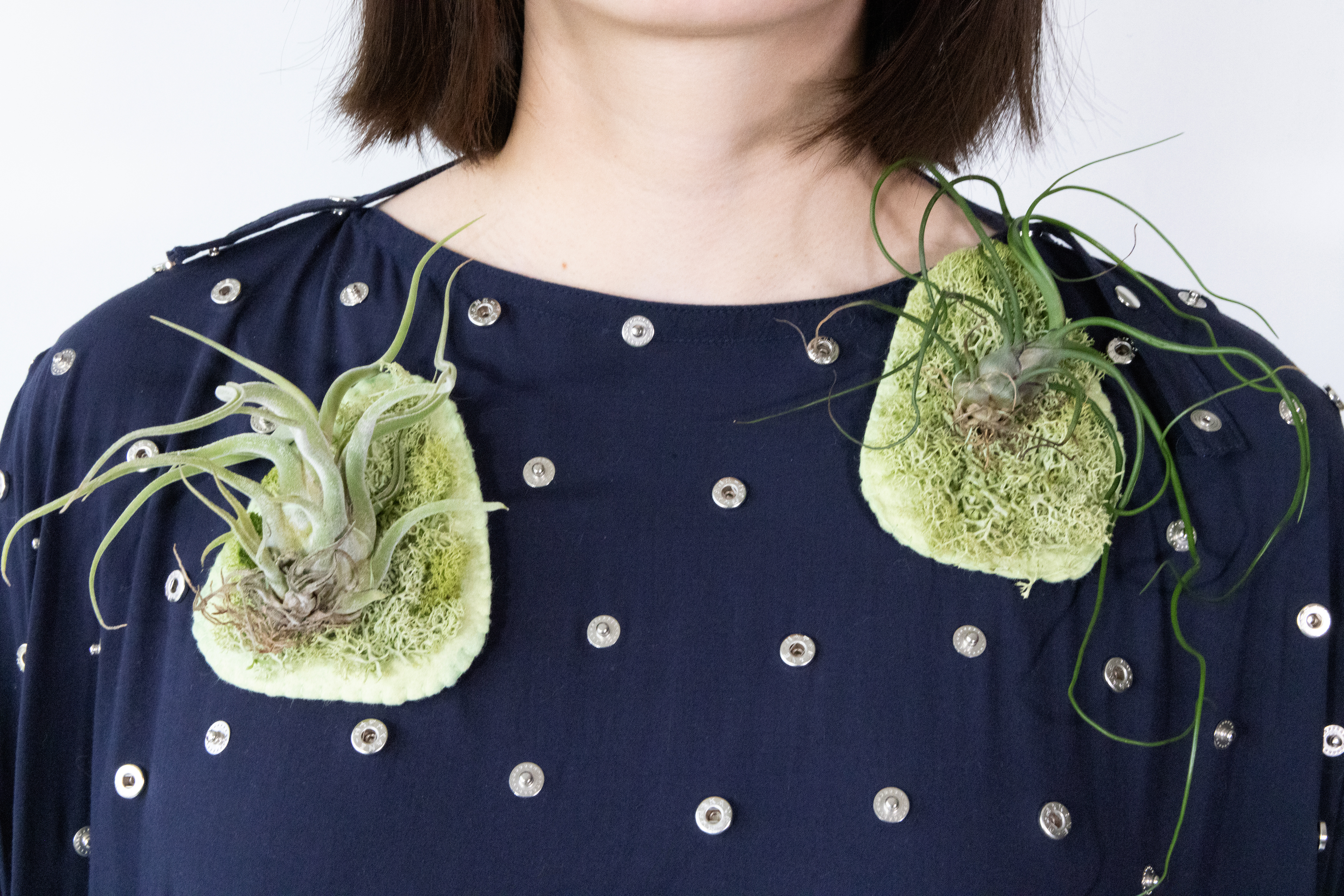
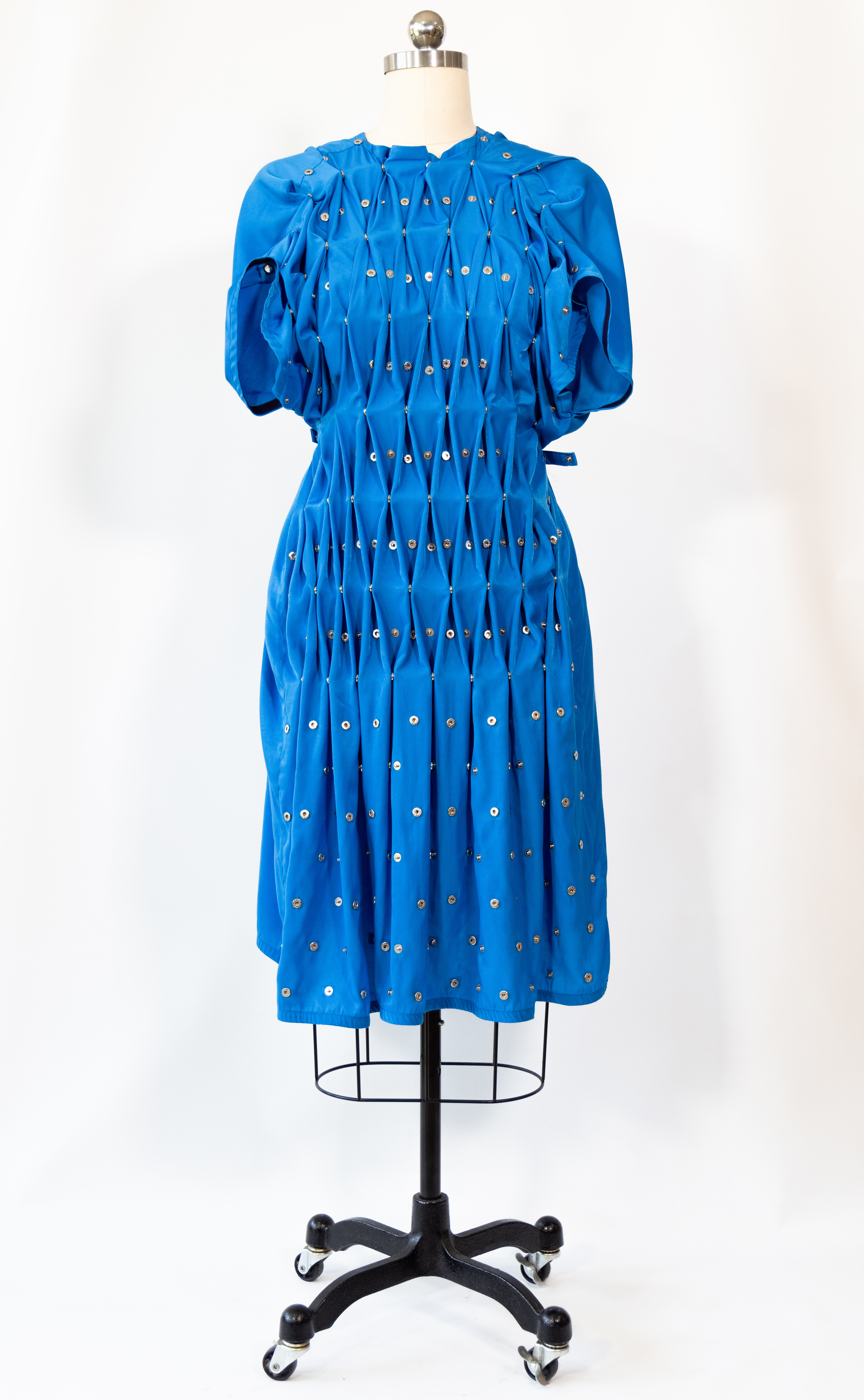
This prototype investigated how open fashion design can support ongoing interaction between garment and wearer. Designed with an oversized, adaptable silhouette, the dress can be worn by a wide range of body shapes and sizes. A network of metal snaps distributed across the garment enables the wearer to modify its shape, proportions, and fit, while also creating opportunities to attach additional components and introduce new configurations over time.
Constructed from deadstock lyocell, or a blend of hemp and silk, the prototypes explored clothing as an open and evolving system rather than a fixed final product. By inviting wearers to actively participate in altering the garment, the design examines how transformability could foster personal expression, versatility, and longer-term engagement with clothing.
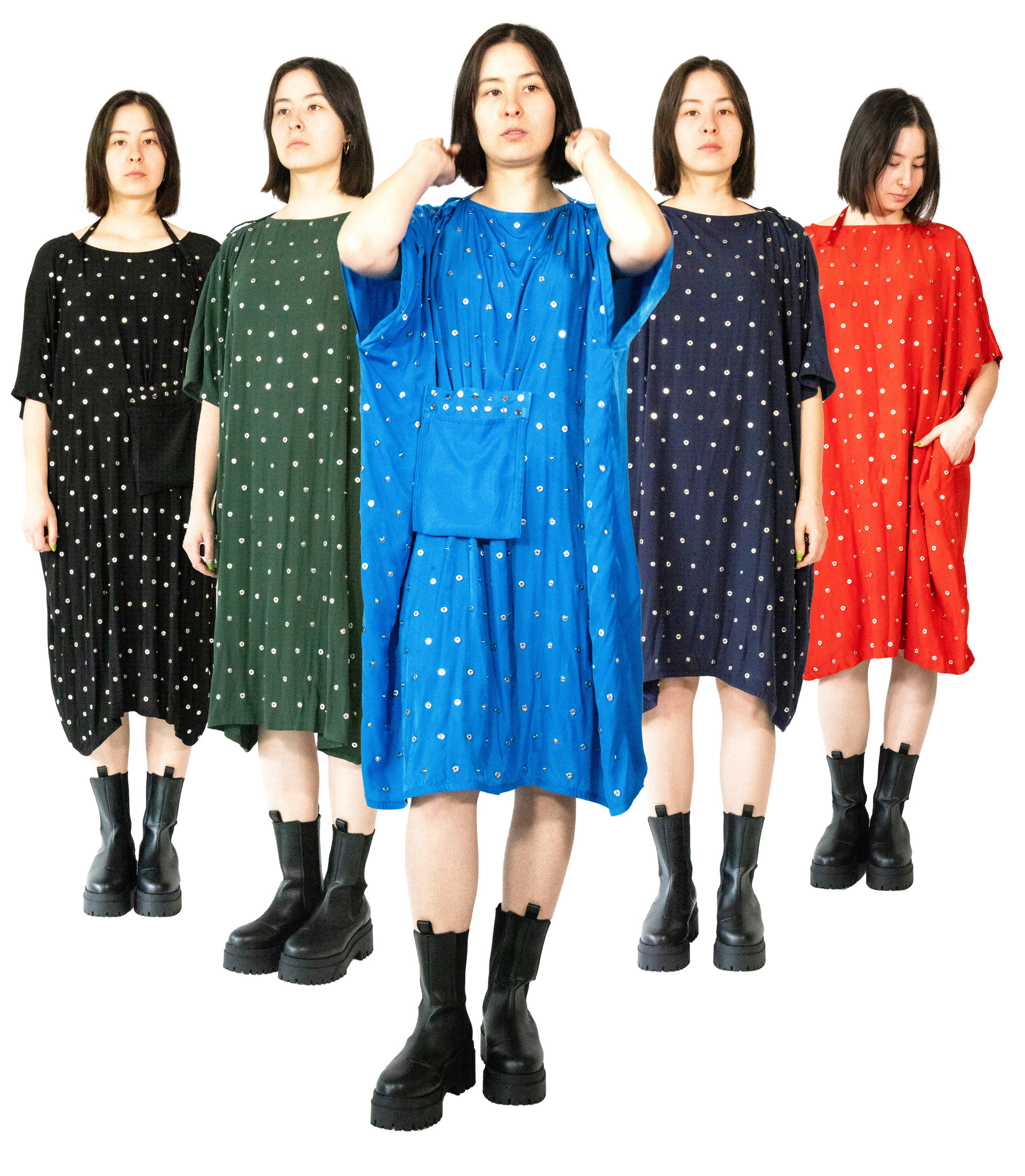
As part of a PhD research project, five versions of the dress were produced and distributed to participants for a three-month wearing study known as the Wearing Challenge. Participants incorporated the dress into their everyday lives and shared weekly reflections on their experiences. This extended engagement provided valuable insights into wearing practices, positioning the dress as both a wearable artefact and a research tool for understanding how clothing is lived, negotiated, and experienced over time.